

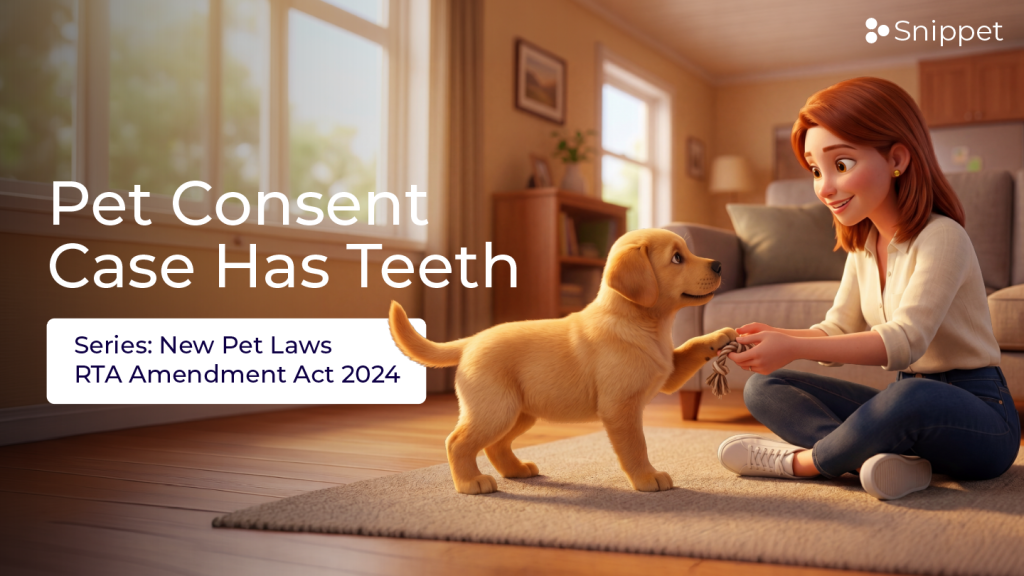
One of the first known Tenancy Tribunal decisions under New Zealand’s new pet consent laws could reshape how landlords handle pet requests going forward.
CLICK HERE TO WATCH A SNIPPET VIDEO BREAKING DOWN THE CASE
In the Christchurch case, tenants wanted to adopt a Labrador puppy in the middle unit of a three-storey building, with a neighbouring unit directly above the tenancy premises.
The landlord refused over concerns about fencing, noise, safety, and damage.
But the tenants proposed solutions, including temporary fencing, supervision, protective mats, and a pet bond.
The Tribunal ruled the refusal was unreasonable, making it clear the starting point is no longer “no pets.”
Pets are presumed allowed unless there are reasonable grounds to refuse.
Importantly, the Tribunal said if risks can be managed through reasonable conditions, landlords should consider saying yes with conditions instead of issuing refusals.
“Although this case only provides persuasive authority, the property manager who shared it with us confirmed that the Tenancy Tribunal adjudicator considered the decision likely to be influential in future cases and took two to three weeks to reach the ruling,” Tenancy consultant Chris Matthews said.
The Tribunal applied a two-step test. First, it looked at the landlord’s reasons for refusing the pet request. Second, it assessed whether those reasons were genuinely reasonable, or whether the concerns could instead be managed through reasonable conditions.
“The message is clear. Where reasonable conditions can mitigate potential risks, those conditions should be implemented instead of landlords trying to justify reasons to say no,” Matthews said.
The names of both parties were suppressed in this case [NZTT 5452836] due to uncertainty surrounding the proper interpretation of the new legislation.
The Residential Tenancies Act was amended in 2024, with the new pet laws commencing from December 1, 2025.